
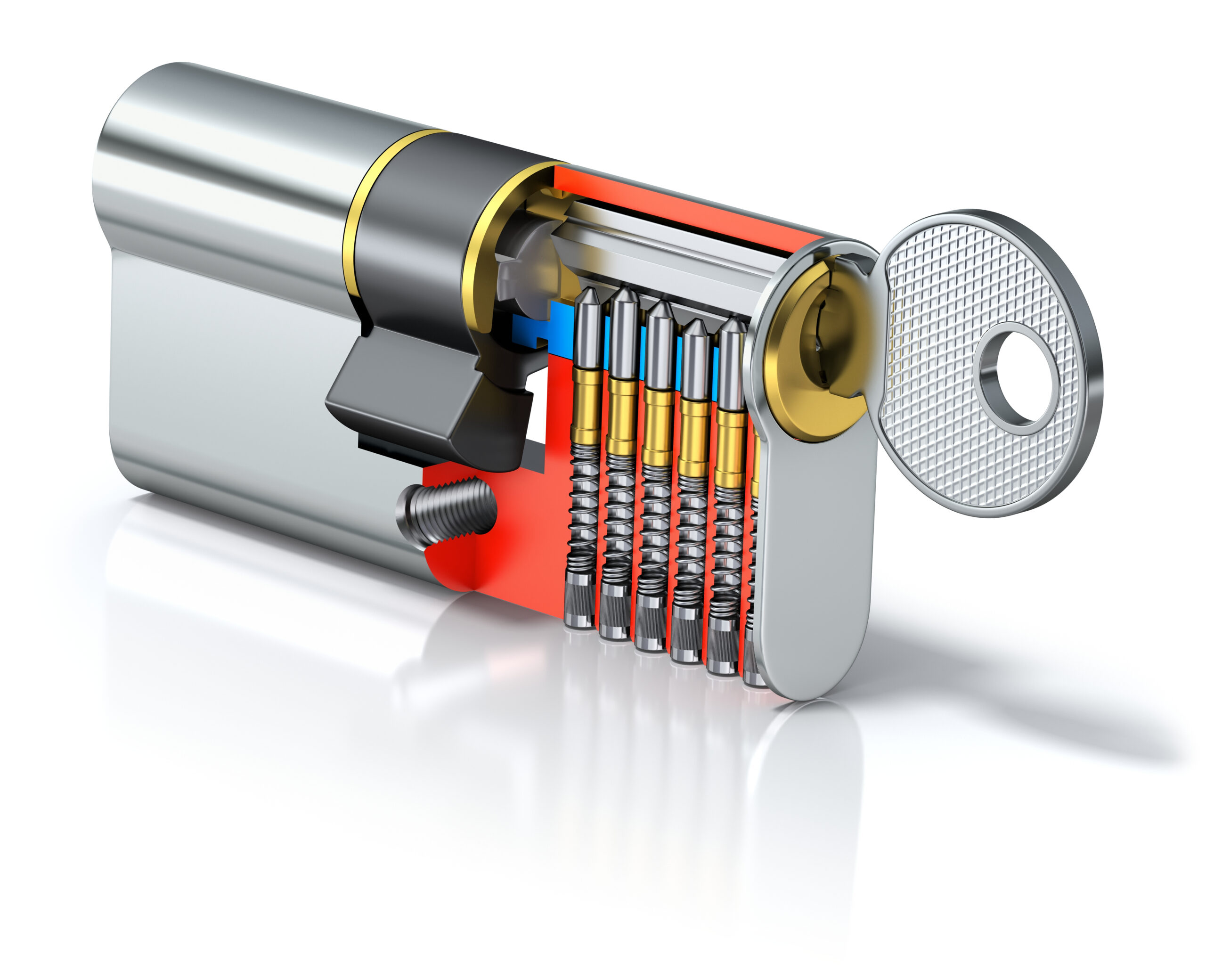
Most of us depend on literal lock and key protection when it comes to our homes, our cars, and things like jewelry boxes or even filing cabinets. Yet, despite the trust that we put into these protective systems, very few of us actually know how they work. Ready to change that? Here’s your basic, beginner-friendly explanation for how a lock and key work — and why!
What does a lock do?
The lock is the “dumb” part of the equation as far as what its job is. Basically, a lock is just a series of tumblers and mechanical pieces that create a maze that can only be solved by a key (or a lockpick, occasionally). While locks may be “dumb” (meaning they are useless without their keys), they are pretty impressive pieces of technology when you take a look inside of it and see just how much mechanical engineering comes into play to design them properly. Locks come in all shapes and sizes and vary from “easy” to “difficult” as far as picking them.
What does a key do?
A key, conversely, is the “smart” part of the equation. It looks like the simpler of the two since it’s just a piece of metal with a series of pin tumblers that are going to fit “perfectly” into the lock that it belongs to. A key is what transforms the maze of tumblers into an orderly line that can be turned and the lock mechanism will be released. This is why a key must be sold with its lock, and it’s why carving an extra key is so important to do correctly: The right key fits perfectly, but the wrong key may go partially in, completely in, but won’t turn, or it won’t even go in at all.
How do a lock and key come together?
The magic in the lock and key protection comes with the right combination. If the pin tumblers on the key don’t fit the pin “programming” in the lock, the key won’t work properly. Likewise, if the key gets too run-down, or it isn’t carved correctly, or the lock gets frozen, the two pieces won’t work together properly.
What if two houses have the exact same lock?
If you know that your house has the same lock as the one beside it, could you technically use the same key on their lock? This is a common question that also applies to two people who have the exact same car, down to the colour. However, each lock and key set that are sold are minutely different from each other (even if they are the exact same brand) so that this can’t happen. If you don’t have the correct key to your specific lock, you won’t be able to get into it.
An easier way to think about it is to look at combination locks. All of the gym or school lockers technically have the same lock, right? Most have a master key that can bypass the combination, but each lock has a unique combination so that one combination won’t work on the other.
When you think about it, a humble lock and key is pretty special and can do a lot to protect us and our belongings. Knowing how they work is a great way to really appreciate them all the more.
For all your Sheffield and surrounding area locksmith needs, contact us today!